An Example of a Well-Designed Board
I found the board shown above on the Internet. Even at a glance, it's clear that noise immunity was an important design goal.
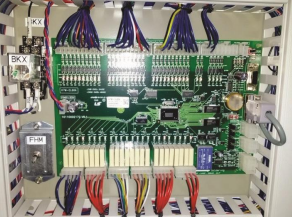
The input circuits are isolated from the rest of the system. This helps prevent external noise from reaching the controller and is one of the most effective ways to improve reliability in industrial environments.
The outputs use relays, and the common terminals are divided into several groups. This is also a good design practice. If all outputs share a single common terminal, excessive current may be forced through one connection point, creating unnecessary heating and reliability problems.
The board uses an isolated DC/DC converter for power. This is important. When designing an isolated system, the power supply must also be isolated.
I've seen boards where all of the inputs and outputs were isolated, but the designer used a standard regulator with a shared ground. In that case, much of the benefit of the isolation is lost.
The board is also physically spacious. Components are not crowded together, and the routing has plenty of room. This may not seem important at first, but extra space often improves both noise performance and cooling.
When components are packed too tightly, heat builds up more easily and routing becomes more difficult. A little extra board space can make a surprising difference.
You'll also notice a larger relay installed separately from the others. This suggests that the designer carefully considered the load requirements.
Relay selection is important. If a relay is used beyond its rated current, the contacts can overheat and eventually weld together. When that happens, the relay may remain permanently on, even when it is supposed to turn off.
Choosing the right relay for the load is just as important as choosing the right microcontroller or power supply.