What Is Isolation?
Isolation means completely separating one part of a circuit from another.
A common misconception is that simply adding an optocoupler creates an isolated system. In reality, true isolation requires the power supply, input circuits, and output circuits to be separated from each other.
Think of the isolated side as an island. There should be no direct electrical connection between the two sides.
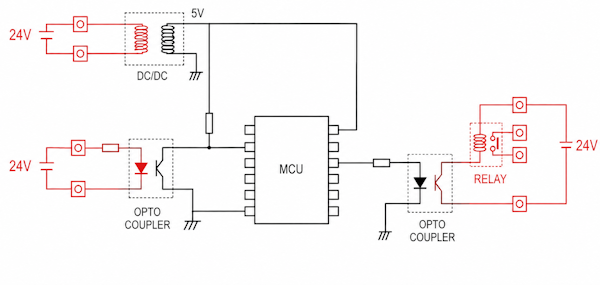
For this reason, isolated power supplies are just as important as optocouplers. An isolated DC/DC converter is commonly used to provide power to the isolated side while keeping the grounds separated.
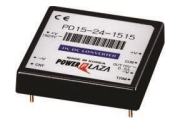
Be careful when selecting DC/DC converters. Some low-cost products may provide voltage conversion but do not provide true isolation. Always check the specifications to confirm that the input and output grounds are isolated.
Is isolation the best solution for noise problems?
That depends.
Some engineers prefer isolation because it completely breaks the path that noise uses to travel between circuits. Others prefer to keep the circuit simple and use protection devices such as TVS diodes, varistors, and ESD protection components to handle noise directly.
Both approaches can work well when used correctly.
The downside of isolation is cost. Isolated power supplies, optocouplers, and isolated communication interfaces all add expense to the design.
As with most engineering decisions, the best solution depends on the requirements of the application.