
Designing a Single-Board PLC: Things to Watch Out For
Many companies start with a PLC-based system and successfully sell their products for years.
Eventually, someone looks at the bill of materials and notices that the PLC is one of the most expensive parts of the system.
The obvious idea is: “Why don't we replace the PLC with a custom PCB and reduce the cost?”
At first, this sounds reasonable.
An engineering company is hired, a microcontroller is selected, and the PLC logic is rewritten in C. The prototype works, production begins, and everything seems fine.
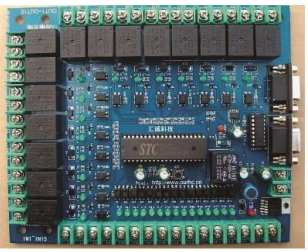
Then the problems start.
The new board doesn't behave quite like the original PLC. Strange failures begin appearing in the field. The system works most of the time, but reliability is not what it used to be.
Why does this happen?
One reason is the software architecture.
PLCs are based on a continuous scan cycle. Inputs are read, logic is executed, outputs are updated, and then the entire process repeats over and over again.
If a noise event temporarily changes the state of an input or output, the next scan often corrects the problem automatically.

Many embedded programmers do not write software this way. Instead, they may change an output and assume it will stay that way forever.
If noise changes the state of an I/O signal, the software may never notice. The incorrect state can remain until someone manually resets the system.
The second reason is hardware robustness.
Commercial PLCs have spent decades surviving harsh industrial environments. They contain protection circuits, filtering, surge suppression, isolation, and many other features that are easy to overlook.
When designing a custom board, it is tempting to focus only on functionality. However, simply making the system work is not enough.
The difficult part is making it survive noise, surges, static electricity, wiring mistakes, and years of real-world use.
Many engineers discover that copying the PLC's logic is easy. Matching the PLC's reliability is the hard part.
This is one reason CUBLOC was originally developed.
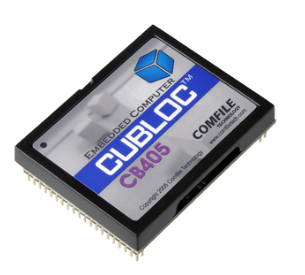
If you build a custom board using a CUBLOC module, some of these challenges become much easier to manage.
Because CUBLOC uses ladder logic, you keep the PLC-style scan cycle and behavior that many industrial systems rely on. This helps avoid some of the software-related issues that can appear when a PLC is replaced with a conventional microcontroller program.
Field maintenance is also easier. Logic changes can often be made without redesigning hardware or rewriting large portions of firmware.
However, the hardware is still your responsibility.
Noise protection, surge protection, PCB layout, grounding, and power supply design must still be done correctly. A CUBLOC module can simplify the control side of the design, but it cannot compensate for poor hardware design.
If you have limited experience designing industrial control hardware, getting help from an experienced PCB designer can save a great deal of time and frustration later.