
TVS Diodes
Have you ever felt a small electric shock when shaking someone's hand or touching a metal object? That is static electricity. Electronic devices can experience similar events when cables are plugged in, unplugged, or touched by people.
Connectors such as RS-232, RS-485, and USB ports are especially vulnerable because they are frequently connected and disconnected. In some cases, a sudden voltage spike can enter through these connections and damage sensitive electronic components.
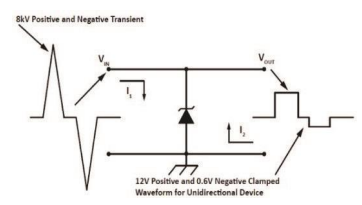
A TVS (Transient Voltage Suppression) diode helps protect against this problem. It is placed between the connector and the circuit it protects. When a sudden voltage spike occurs, the TVS diode quickly absorbs the excess energy and limits the voltage reaching the electronic components.
As shown in the figure, even if the input voltage suddenly rises to a very high level, the TVS diode prevents most of that spike from reaching the circuit.
The following example shows a TVS diode used in an RS-485 communication circuit.
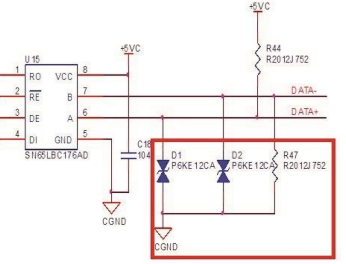
One important thing to remember is that a TVS diode protects against very short voltage spikes, such as those caused by static electricity or switching transients. It is not designed to protect against a continuous overvoltage condition.
When used in the right places, TVS diodes can greatly improve the reliability of your products and help prevent costly field failures and service calls.